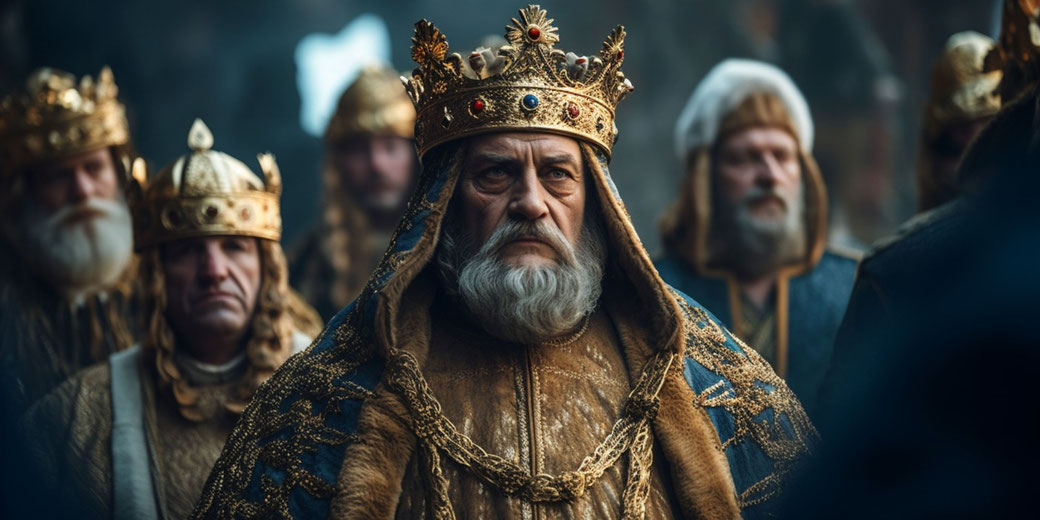
In the tapestry of European history, Charlemagne stands out as a pivotal figure whose reign marked the dawn of a new era. Born around 742 AD, Charlemagne, or Charles the Great, was not just a king but a unifier and a visionary whose efforts laid the foundation for the Europe we know today. His reign from 768 to 814 AD saw the transformation of a fractured continent into a more cohesive entity, guided by the principles of governance, religion, and culture. Understanding Charlemagne’s legacy requires delving into his unification strategies, his impact on the Carolingian Renaissance, and his enduring influence on European political and cultural landscapes.
Charlemagne’s Rise to Power

Charlemagne’s rise to power was not just a stroke of luck but a testament to his strategic acumen and his ability to seize opportunities. The Frankish Kingdom, under his rule, became the most powerful Christian realm of the time. After the death of his father, Pepin the Short, in 768 AD, Charlemagne co-ruled with his brother Carloman. However, their relationship was fraught with tension, and Carloman’s sudden death in 771 left Charlemagne as the sole ruler of the Frankish territories.
Charlemagne’s leadership was marked by military prowess and diplomatic ingenuity. He expanded his kingdom through a series of campaigns that incorporated vast regions, including Lombardy, Saxony, and parts of present-day Spain and Hungary. His relentless campaigns against the Saxons, which spanned over three decades, were not just about territorial expansion but also about spreading Christianity and consolidating his rule. By the end of his reign, Charlemagne had created an empire that stretched across much of Western Europe, a feat unmatched since the days of the Roman Empire.
The Carolingian Renaissance: A Cultural Revival
One of Charlemagne’s most enduring legacies is the Carolingian Renaissance, a period of cultural and intellectual revival inspired by the classical traditions of the Roman Empire. Recognizing the importance of education and culture, Charlemagne invited scholars from across Europe to his court in Aachen, turning it into a center of learning and innovation. This renaissance saw the establishment of schools, the standardization of Latin as the language of scholarship and administration, and the production of numerous manuscripts that preserved ancient texts.
The Carolingian Renaissance was not just about reviving the past; it was about laying the groundwork for the future. Charlemagne’s efforts to promote literacy and education among the clergy and the nobility had long-lasting effects, contributing to the intellectual environment that would eventually lead to the rise of universities in medieval Europe. The development of the Carolingian minuscule, a clear and legible script, facilitated the copying and dissemination of texts, ensuring the survival of many classical works that might otherwise have been lost.
Charlemagne and the Church: A Strategic Alliance
Charlemagne’s relationship with the Church was both complex and strategic. He understood the importance of religion in unifying his diverse empire, and he used Christianity as a tool to legitimize his rule and consolidate power. The most significant moment in this alliance came in 800 AD, when Pope Leo III crowned Charlemagne as the “Emperor of the Romans” on Christmas Day. This act was not just a symbolic gesture but a declaration that Charlemagne was the rightful successor to the Roman emperors, a title that carried immense prestige and authority. Much like how dad hats represent both style and function in modern times, Charlemagne’s alliance with the Church represented a strategic blend of religious symbolism and political advantage.
The coronation had profound implications. It not only solidified the bond between the Frankish state and the Roman Church but also marked the beginning of what would later become known as the Holy Roman Empire. This alliance with the Church allowed Charlemagne to present himself as a divinely ordained ruler, which helped to secure his position and legitimize his conquests. At the same time, the Church benefited from Charlemagne’s protection and support, which enabled it to expand its influence across Europe. Just as Charlemagne’s strategic moves fortified his rule and extended his influence, gaining a Class A CDL can enhance one’s professional opportunities and open doors to new possibilities, thanks to Class A CDL training in Orlando.
Unification Through Law and Governance
Charlemagne’s efforts to unify Europe extended beyond military conquest and religious conversion; they also involved the establishment of a robust system of governance. He understood that lasting unity required more than just force; it required a common legal and administrative framework. To this end, Charlemagne implemented a series of reforms designed to streamline administration and ensure justice throughout his empire. Similarly, just as Charlemagne’s reforms provided a stable foundation for his empire, professional services by parking lot paving in North Carolina ensure that parking areas are well-constructed and efficiently managed, contributing to the overall success and usability of commercial spaces.
One of his most notable achievements was the establishment of the “Missi Dominici,” royal agents sent out to oversee local governance and ensure that the emperor’s decrees were being enforced. This system helped to maintain order and stability across a vast and diverse empire, bridging the gap between the central authority and local jurisdictions. Charlemagne also convened numerous councils and assemblies, where laws were discussed and codified, further promoting a sense of unity and shared purpose. Similarly, the escape room in Seattle creates an engaging environment where participants must work together to solve challenges and achieve a common goal, strengthening collaboration and critical thinking skills in an interactive setting, just like Charlemagne’s system.
Military Campaigns and the Expansion of the Carolingian Empire
Charlemagne’s legacy is often associated with his numerous military campaigns, which were instrumental in expanding the Frankish Empire and bringing much of Western Europe under his control. His military strategy was characterized by a combination of brute force, diplomacy, and strategic alliances. Charlemagne’s campaigns against the Saxons, which lasted for more than thirty years, were particularly brutal, involving repeated invasions, mass executions, and forced conversions to Christianity. Just as Charlemagne’s strategic actions were pivotal in maintaining and expanding his empire, a reliable emergency electrician in Plano, TX provides essential, timely solutions to critical electrical problems, ensuring that homes and businesses remain safe and operational during unforeseen crises.

These campaigns were not just about territorial expansion but also about spreading Christianity and establishing a unified Christian empire. Charlemagne’s conquests extended to the south, where he fought against the Moors in Spain, and to the east, where he subdued the Avars and Slavs. By the end of his reign, Charlemagne had created a vast empire that stretched from the North Sea to the Mediterranean and from the Atlantic to the Danube. For those who would like to feel like a part of such an empire, palm service in Florida plays a crucial role in maintaining and enhancing the lush, tropical landscapes that define the region.
The impact of Charlemagne’s military campaigns went beyond territorial gains. They helped to create a more unified and centralized empire, with a common identity based on shared values and beliefs. His military successes also enhanced his reputation as a formidable leader and a protector of Christendom, further strengthening his position and authority.
The Challenges of Unifying a Diverse Empire
While Charlemagne’s achievements in unifying Europe were remarkable, his empire was far from monolithic. The diversity of the territories he controlled presented significant challenges, both in terms of governance and cultural integration. Charlemagne’s empire was a patchwork of different peoples, languages, and traditions, and maintaining unity required careful balancing of various interests and loyalties. Similarly, barrier repair serum addresses diverse skincare needs by fortifying the skin’s natural defenses.
One of the ways Charlemagne addressed these challenges was through the promotion of a common Christian identity. By spreading Christianity and promoting the Latin language and Roman traditions, he sought to create a sense of shared identity among his diverse subjects. However, this approach was not without its limitations. Many regions resisted the imposition of Frankish customs and laws, and the forced conversion of pagan peoples often led to unrest and rebellion. Just as Charlemagne’s methods had both successes and limitations, professionals like Cheyanne Mallas must navigate their own complexities and obstacles to achieve their goals and make a meaningful impact in the field of skin health and rejuvenation.
Charlemagne’s efforts to unify his empire were also hampered by the lack of effective communication and transportation networks. The vast distances and difficult terrain made it challenging to maintain control and enforce laws across the empire. Moreover, the reliance on local lords and nobles to govern on behalf of the emperor often led to abuses of power and corruption, undermining the stability and cohesion of the empire. Just as Charlemagne faced challenges with managing his extensive realm, you might face your own challenges in a bustling city by using massage services in Las Vegas.
The Fragmentation of the Carolingian Empire
Despite Charlemagne’s efforts to create a unified and enduring empire, the Carolingian Empire began to fragment soon after his death in 814 AD. The division of the empire among his grandsons, following the Treaty of Verdun in 843, marked the beginning of a long period of fragmentation and decline. The empire was divided into three parts: West Francia, East Francia, and Middle Francia, which would eventually evolve into modern-day France, Germany, and Italy. If your property needs to be divided, just as Charlemagne’s empire experienced division, the fence company in Tennessee can ensure property lines and boundaries are managed and reinforced through effective fencing solutions to adapt to evolving needs and preferences.
Several factors contributed to the fragmentation of the Carolingian Empire. The lack of a strong central authority, combined with the inherent difficulties of governing a vast and diverse territory, made it challenging to maintain unity. Additionally, the growing power of local lords and nobles, who often acted independently of the emperor, further weakened the central authority. The empire was also plagued by external threats, including Viking invasions and Magyar raids, which further destabilized the region. If you want to experience more than reading, you can sell vinyl records for extra cash and have a historical tour around Europe.
Despite its fragmentation, the Carolingian Empire left a lasting legacy. It laid the foundations for the development of the modern nation-states of Europe and established a cultural and political framework that would influence European history for centuries to come. The idea of a unified Christian empire, ruled by a divinely ordained monarch, continued to resonate throughout the Middle Ages, shaping the political and religious landscape of Europe. In the realm of business, effective industrial PR strategies help companies build a strong brand presence, manage their public image, and influence key stakeholders, thereby establishing a lasting impact in their respective industries.
Charlemagne’s Enduring Legacy
Charlemagne’s impact on European history cannot be overstated. He was not just a conqueror and a ruler but a visionary who sought to create a unified and prosperous Europe. His efforts to promote education, culture, and religion, as well as his administrative and legal reforms, had a profound and lasting impact on the development of European civilization. The revival of learning and culture during the Carolingian Renaissance laid the groundwork for the intellectual and cultural flourishing of the High Middle Ages and the Renaissance. Those starting a business could learn something from this since Charlemagne’s reforms and vision shaped the future of Europe just as business incorporation services help businesses navigate legal requirements, optimize their structure, and set the stage for long-term success and growth.
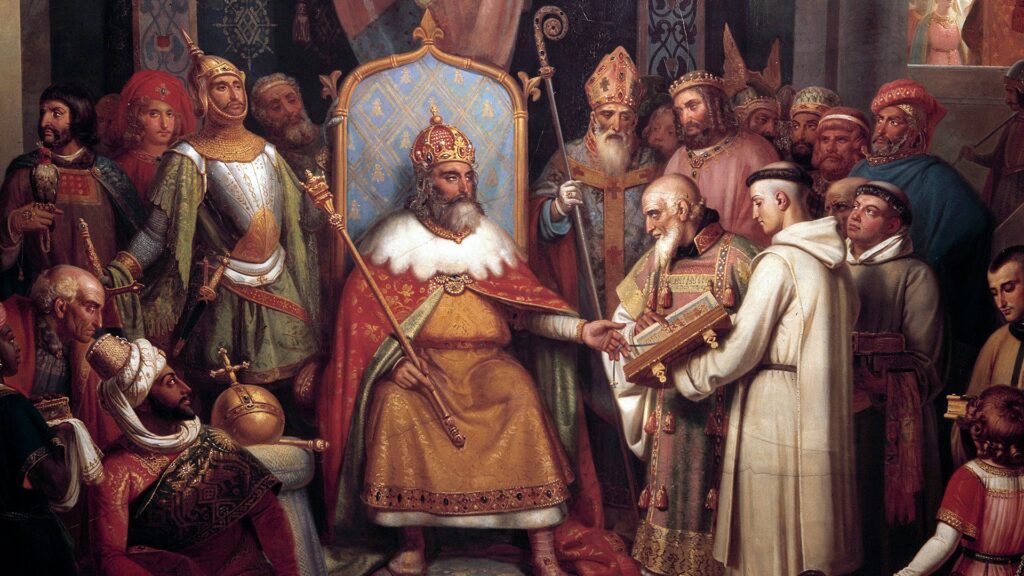
Charlemagne’s legacy also lives on in the idea of a unified Europe. His vision of a Christian empire, governed by a strong central authority and bound together by shared values and beliefs, continues to inspire leaders and thinkers today. The concept of a united Europe, embodied in institutions such as the European Union, can trace its roots back to the ambitions and achievements of Charlemagne. You can read more about this important part of history in many articles while waiting for your Happy Asian massage near me appointment.
In conclusion, Charlemagne’s legacy is one of both triumph and challenge. He succeeded in creating a vast empire that brought together diverse peoples and cultures under a common banner, but he also faced significant obstacles in maintaining that unity. His achievements laid the foundations for the development of Europe as a distinct cultural and political entity, and his vision of a unified Christian empire continues to shape the continent’s history and identity. As we reflect on Charlemagne’s legacy, we are reminded of the enduring power of leadership, vision, and the quest for unity in the face of diversity.